On to Cape Breton Island!
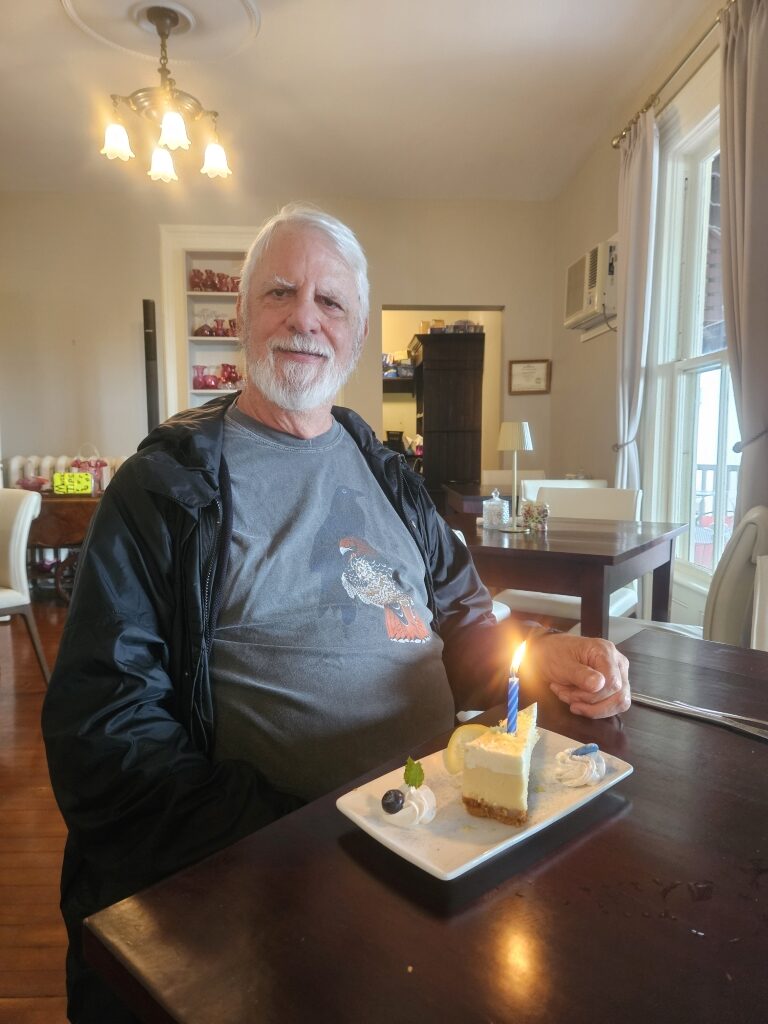
8/1 — For those who don’t know, August 1st is Mark’s birthday. We had a delicious lunch at a historic Air B&B in Baddeck. For dessert he had a piece of cheesecake with a candle. Throughout our trip, Mark was on a quest to find the “best” seafood chowder. We ranked this one second, following the chowder at the Church Brewing Co. (Sorry, no picture there.)
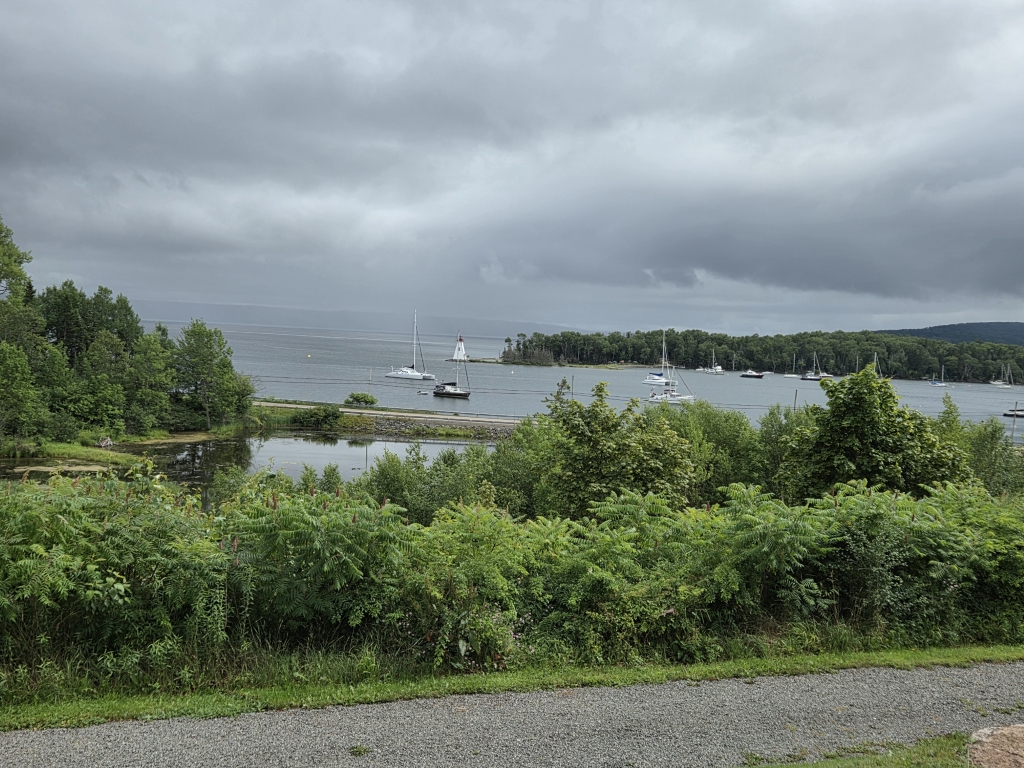
We visited the Alexander Graham Bell museum in Baddeck, Cape Bretton Island, Nova Scotia. This is a bucolic setting.
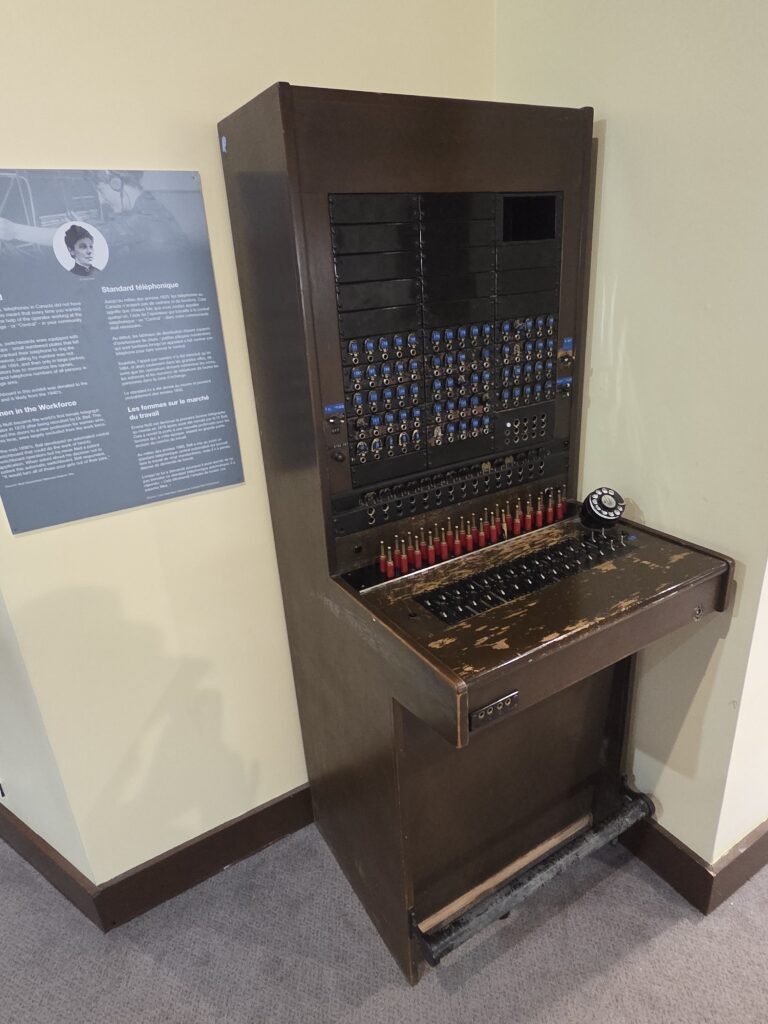
 His history is very interesting … his mother was deaf and Bell’s father, grandfather, and brother had all been associated with work on elocution and speech. He was working under his father on a mechanism that would mechanically reproduce speech. From there it was a short leap to the telephone transducer and the first working telephone! It’s success, patent, AT&T and his financial future was assured.
Because of his and his father’s work on elocution and speech, he worked with the deaf. Throughout his life, Bell sought to assimilate the deaf and hard of hearing with the broader population. He encouraged speech therapy and lip-reading as well as sign language and discouraged a sub-culture of deaf-only persons.
Bell was professor of Vocal Physiology and Elocution at the Boston University School of Oratory. After only one year, he gave up this position to concentrate on his experiments in sound, retaining only two private students. One of those, 15-year-old Mabel Hubbard, would eventually become his wife.
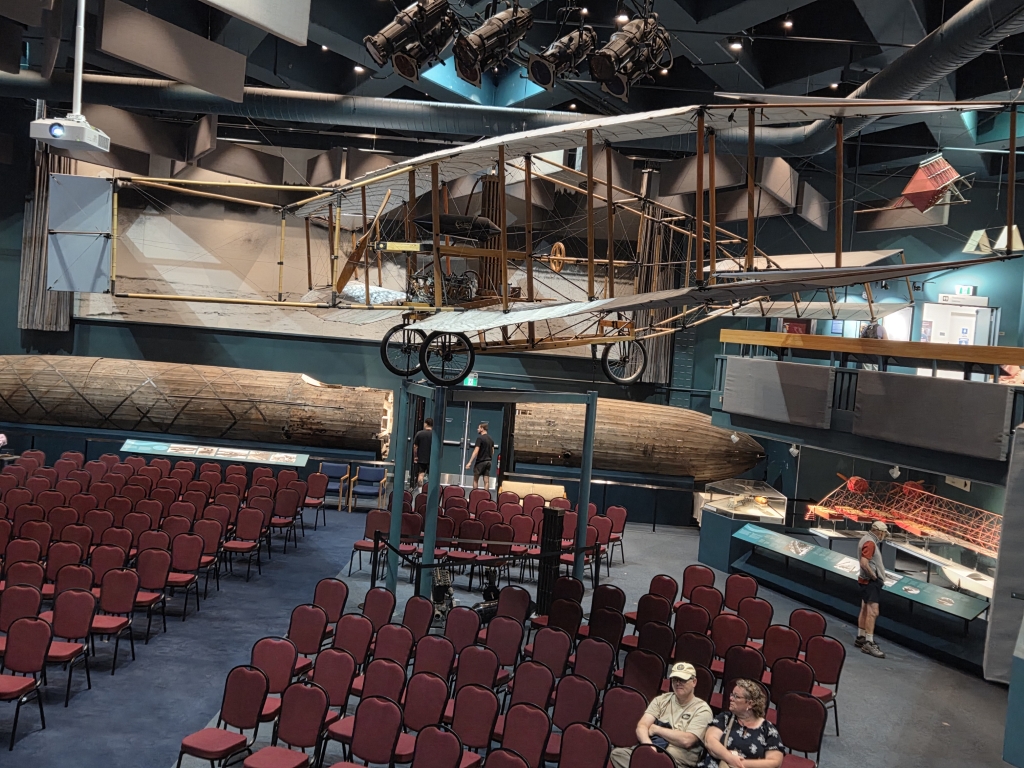
The range of Bell’s inventive genius is represented only in part by the 18 patents granted in his name alone and the 12 he shared with his collaborators. These included 14 for the telephone and telegraph, four for the photophone, one for the phonograph, five for aerial vehicles, four for “hydroairplanes”, and two for selenium cells. Bell’s inventions spanned a wide range of interests and included a metal jacket to assist in breathing {precursor to the iron lung used during the polio epidemic}, the audiometer to detect minor hearing problems, a device to locate icebergs, investigations on how to separate salt from seawater, and work on finding alternative fuels. [Wikipedia]
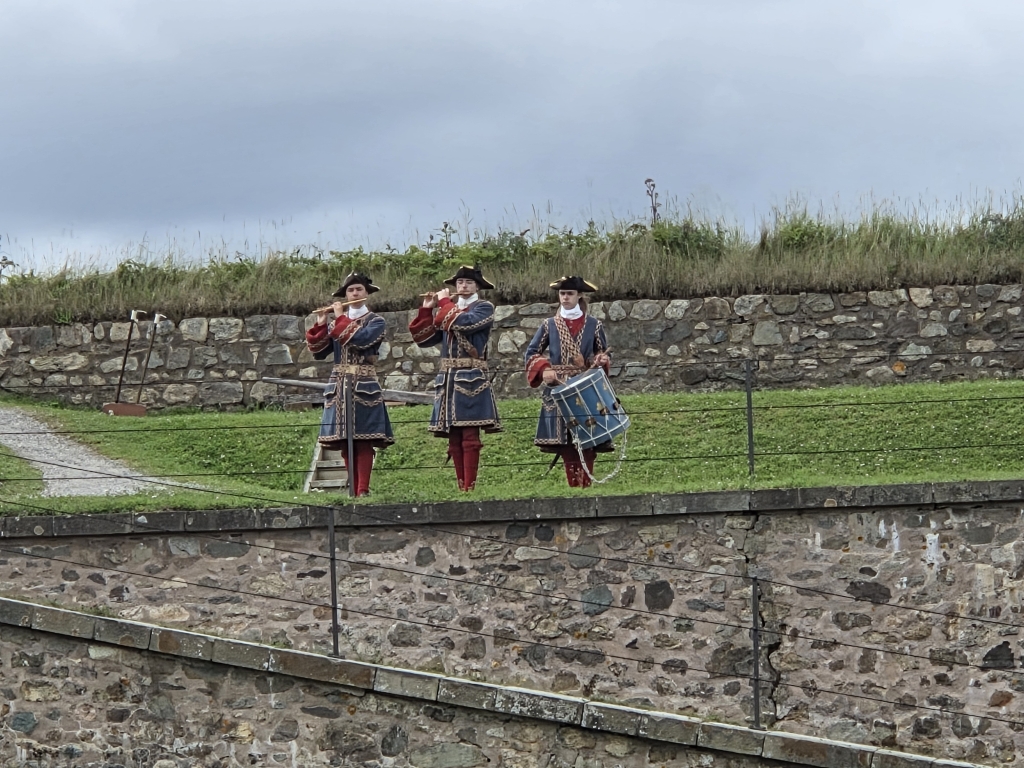
8/2 — The next day we visited the Fortress of Louisbourg National Historic Site. This reconstruction of the original Louisbourg Fortress is filled with interpreters in period costume who share insights into the life of residents from the 1700’s.
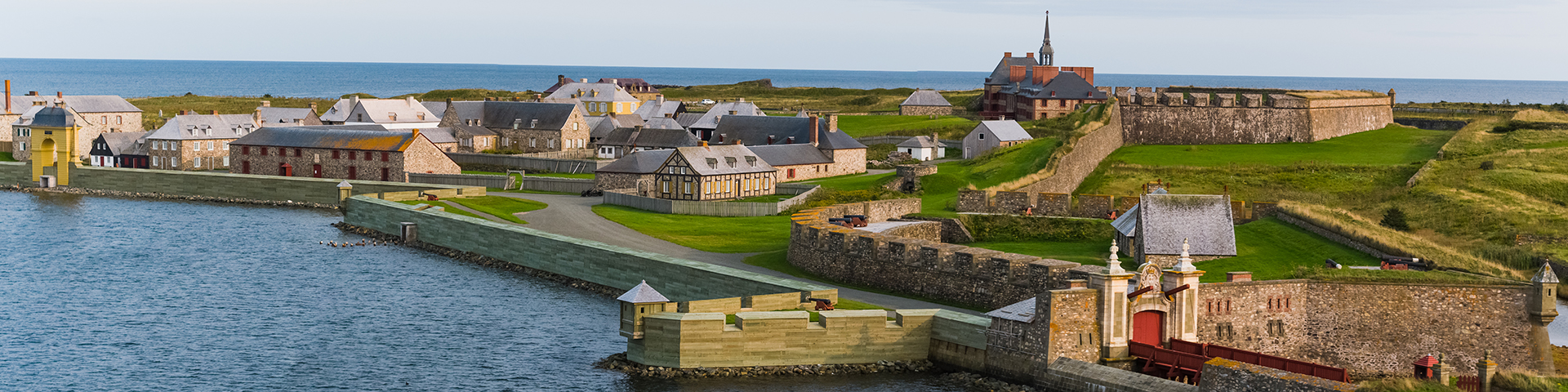
Events included a fife and drum corps and the firing of the battlement cannon.
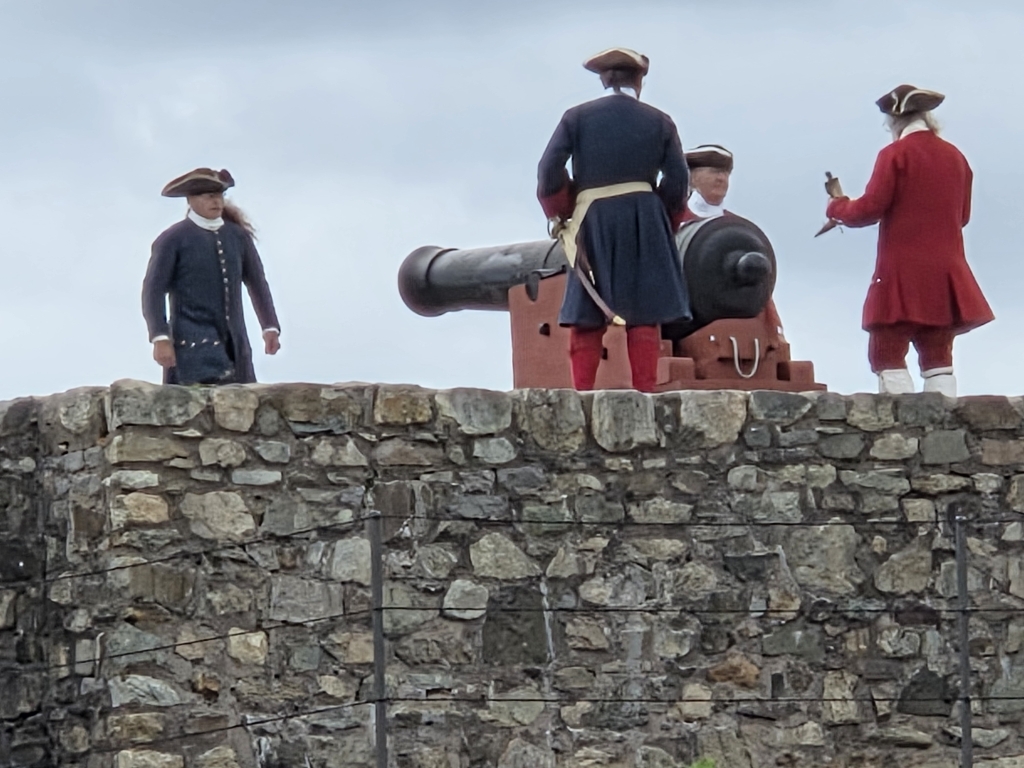
Louisbourg was founded by the French in 1713, was overrun by New Englanders in 1745, was ceded back to the French three years later, and was again conquered by the British in 1758 to remain in British hands.
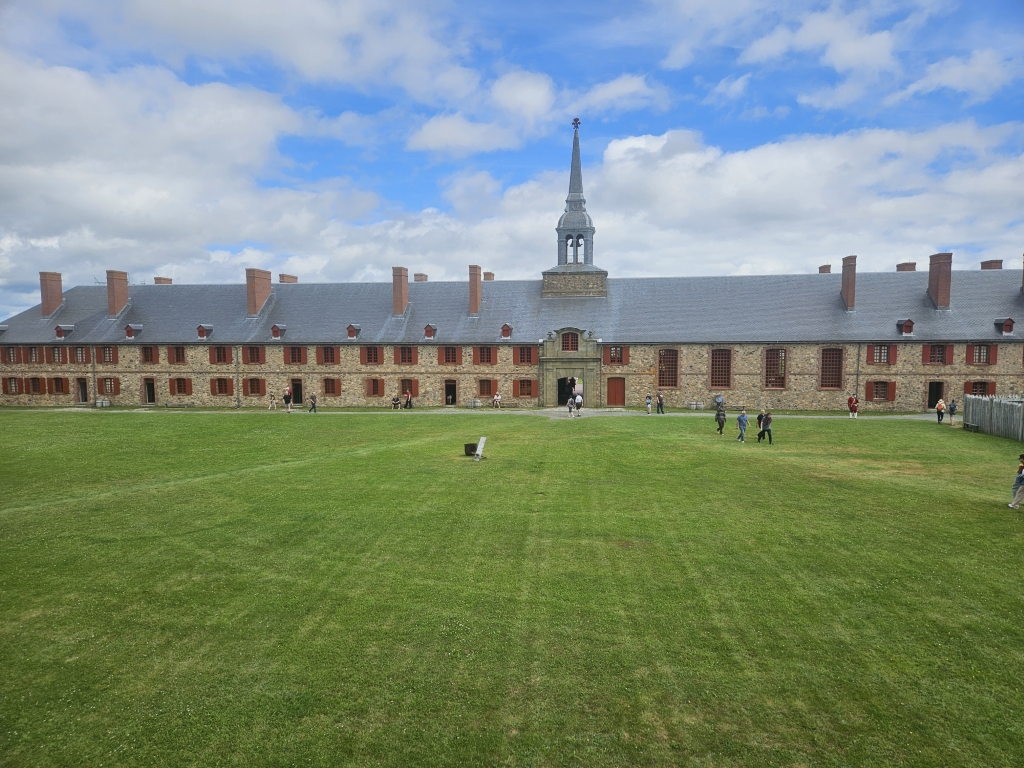
The King’s Bastion was the Governor’s residence, barracks for soldiers, contained a chapel, and much more. We were free to wander many of the rooms, and we chatted with one of the sentries on duty as well as many interpreters.
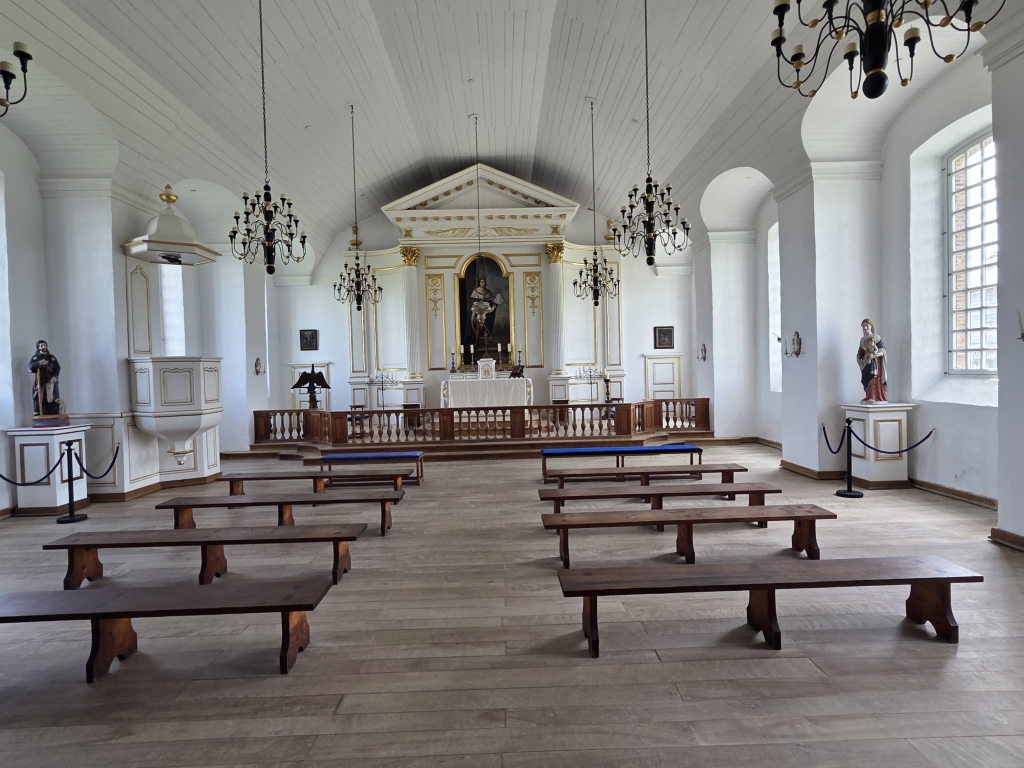
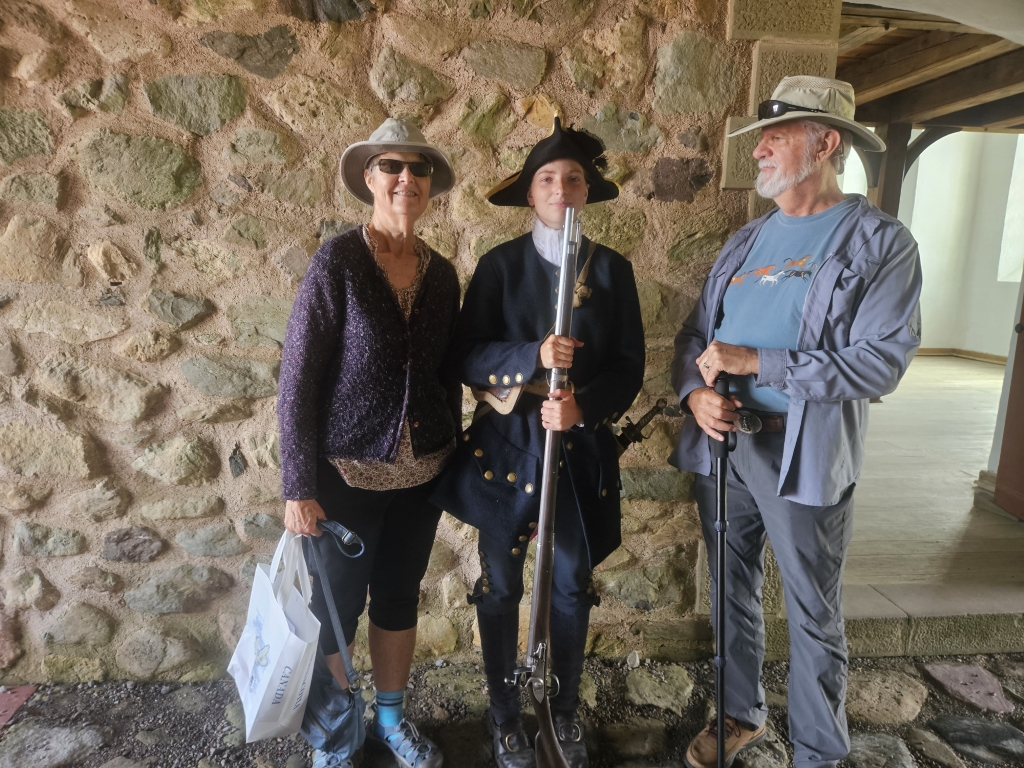
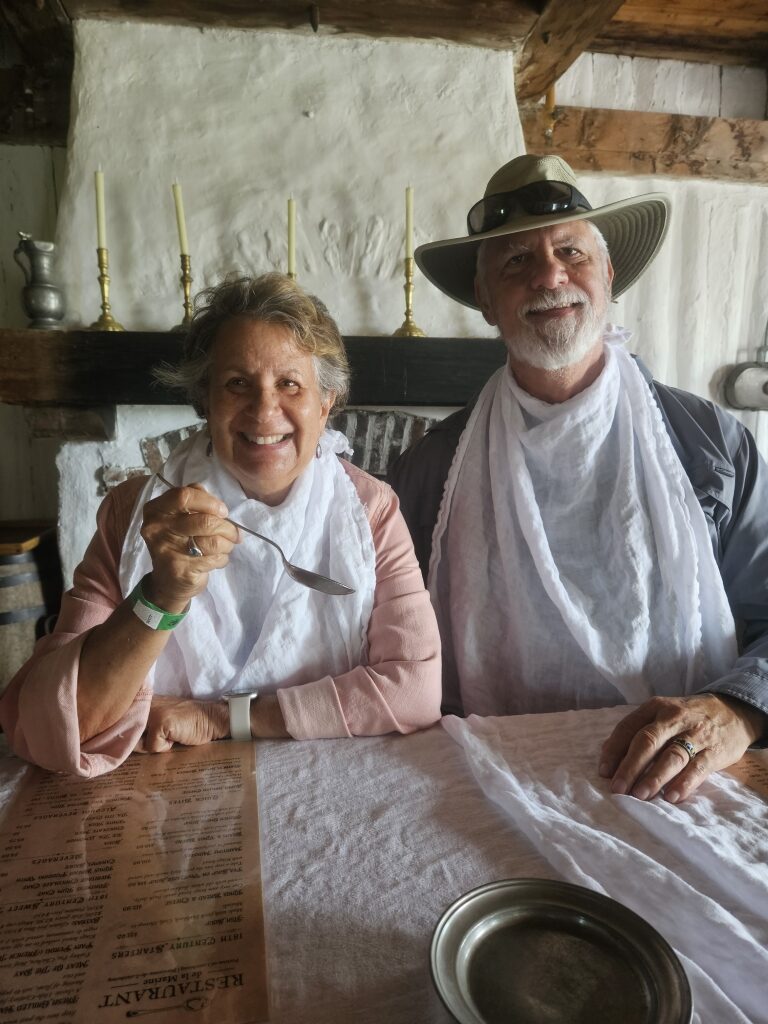
The streets were bustling with people, and we ate lunch in the tavern. They instructed us that our napkins should be tied around our neck, and the only utensil provided was a spoon (every gentleman carried his own knife.)
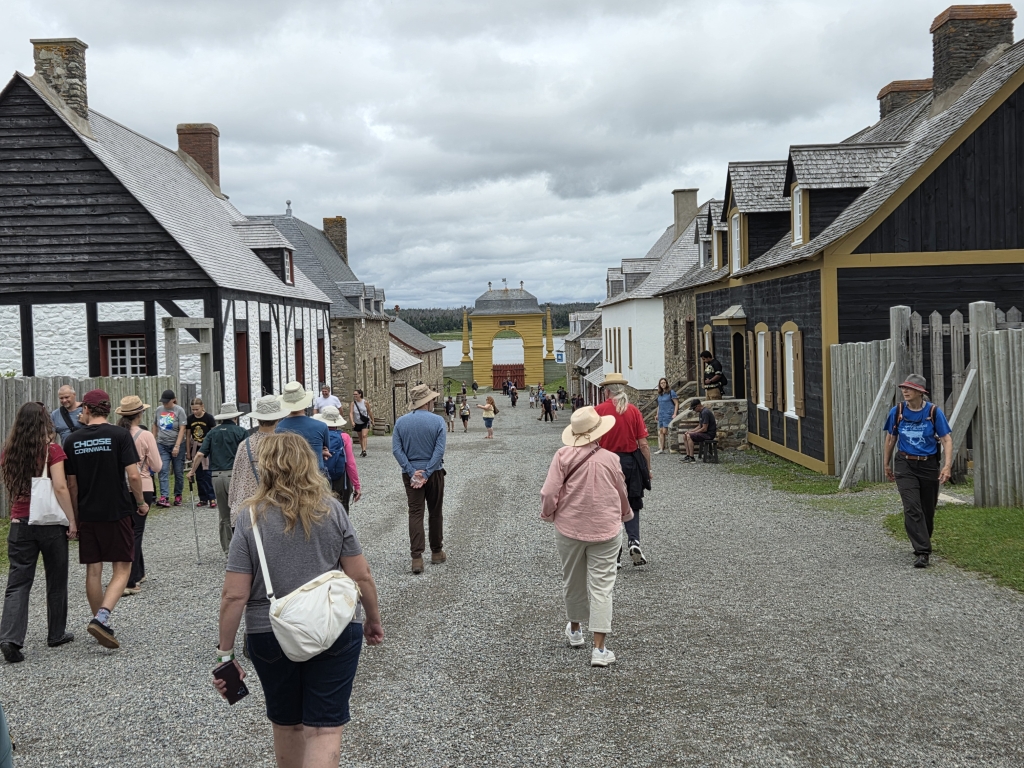
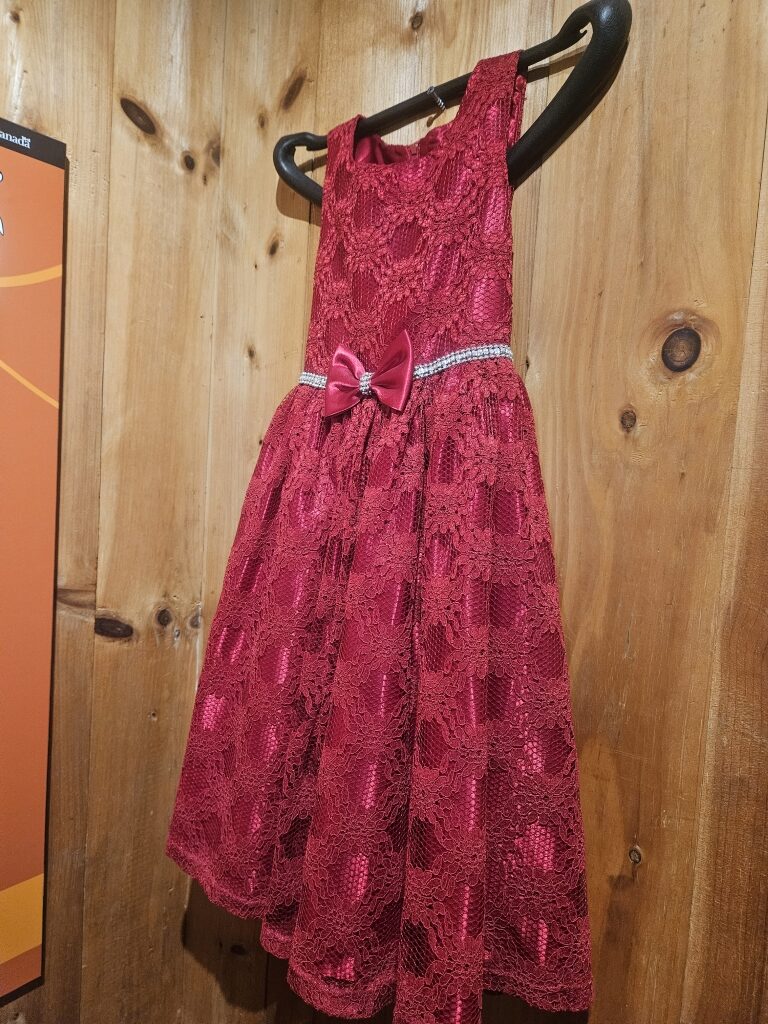
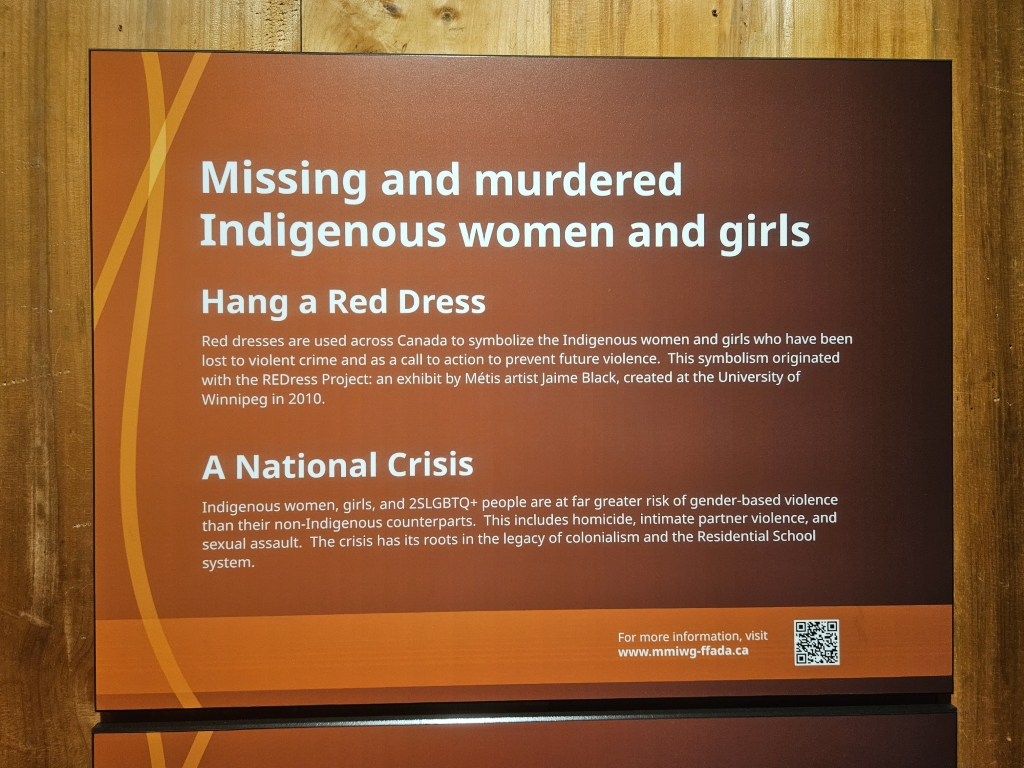
There was a display and explanation about the “Red Dress”.
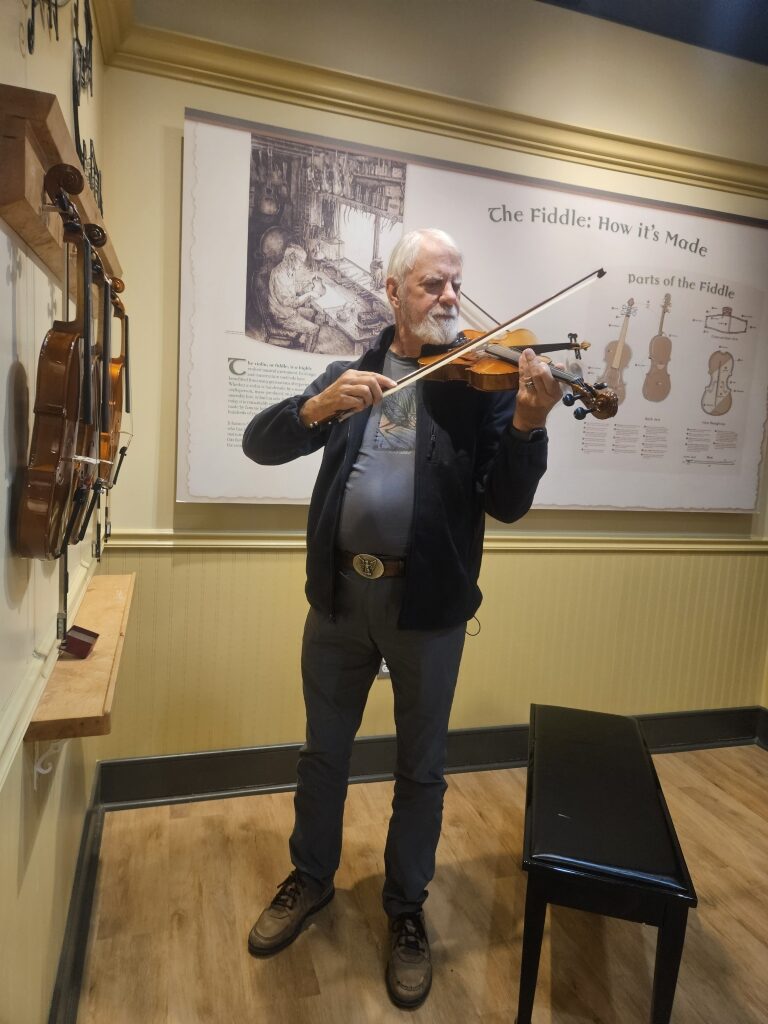
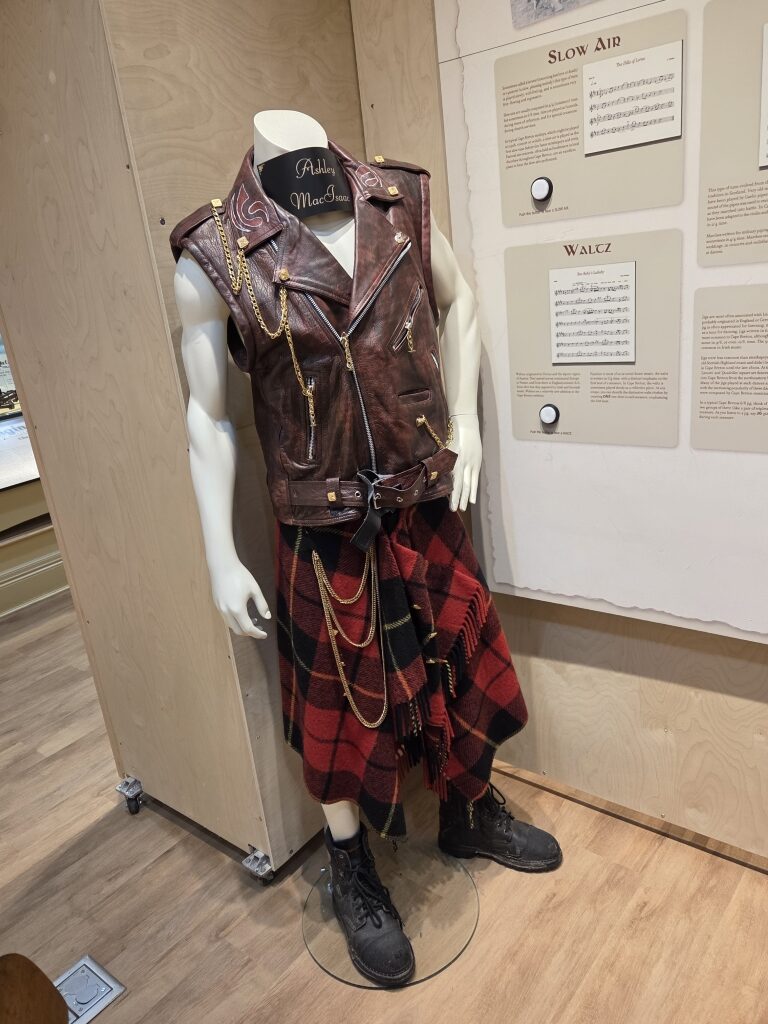
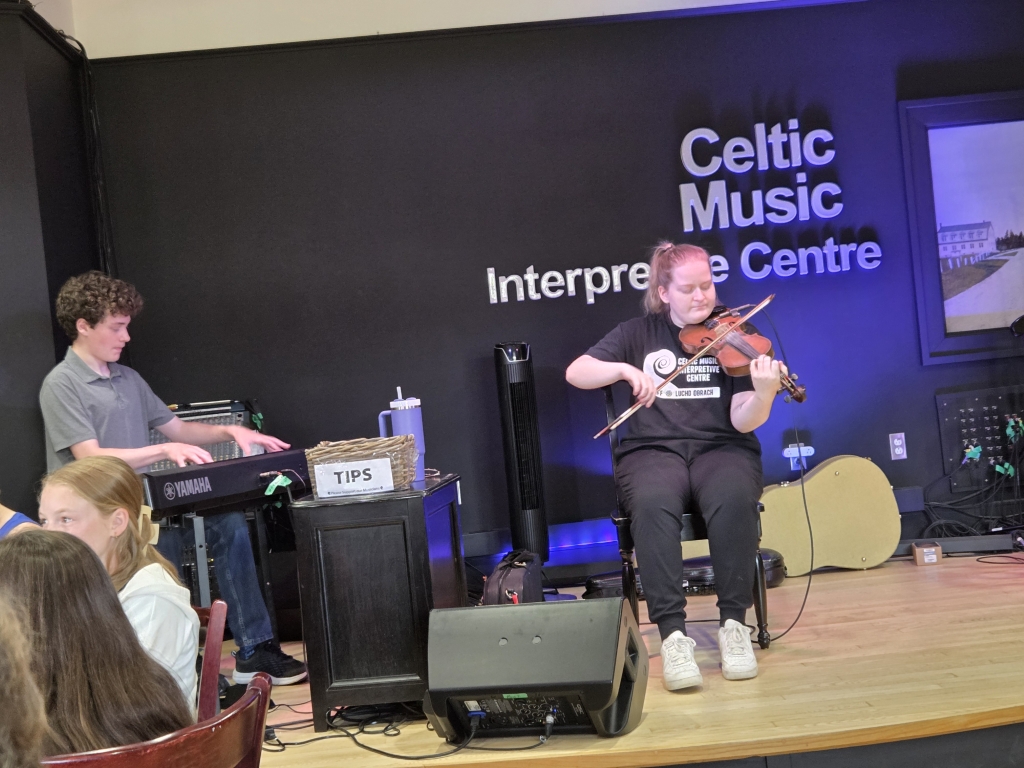
8/03 — The following day we drove to the Celtic Music Center, in Judique, Cape Bretton, Nova Scotia. This was a delightful stop with a small museum about Celtic Music that included an introduction to playing the fiddle, celtic garb, bag pipes, etc.
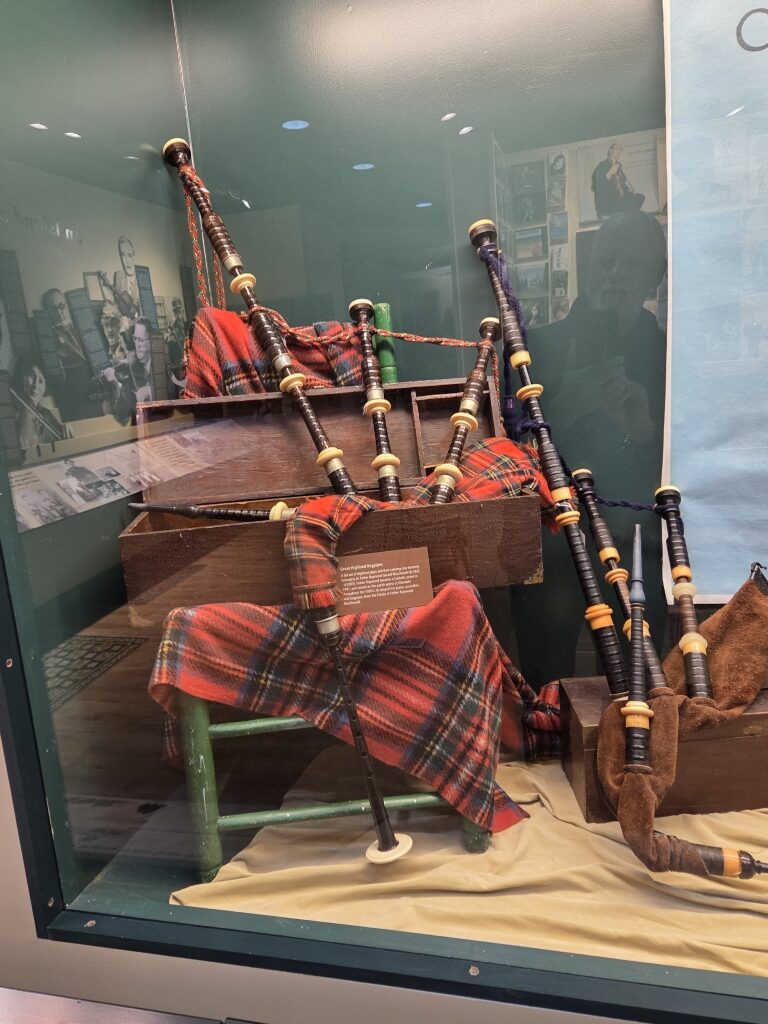
Lunch was served while Celtic music was performed on stage. 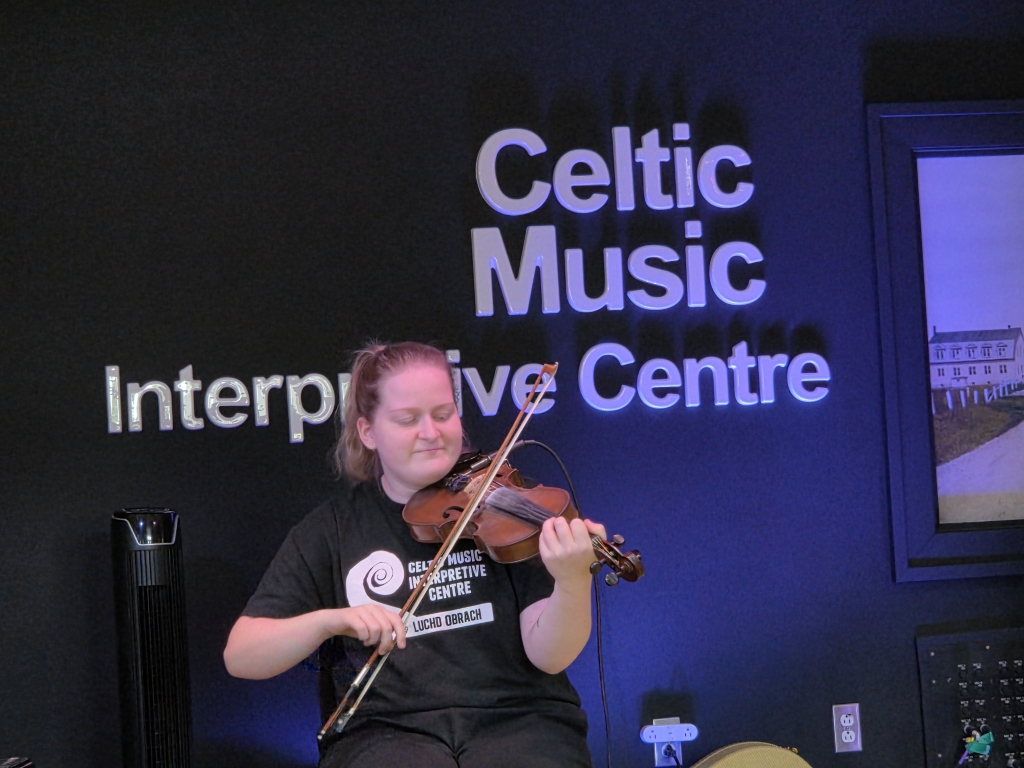
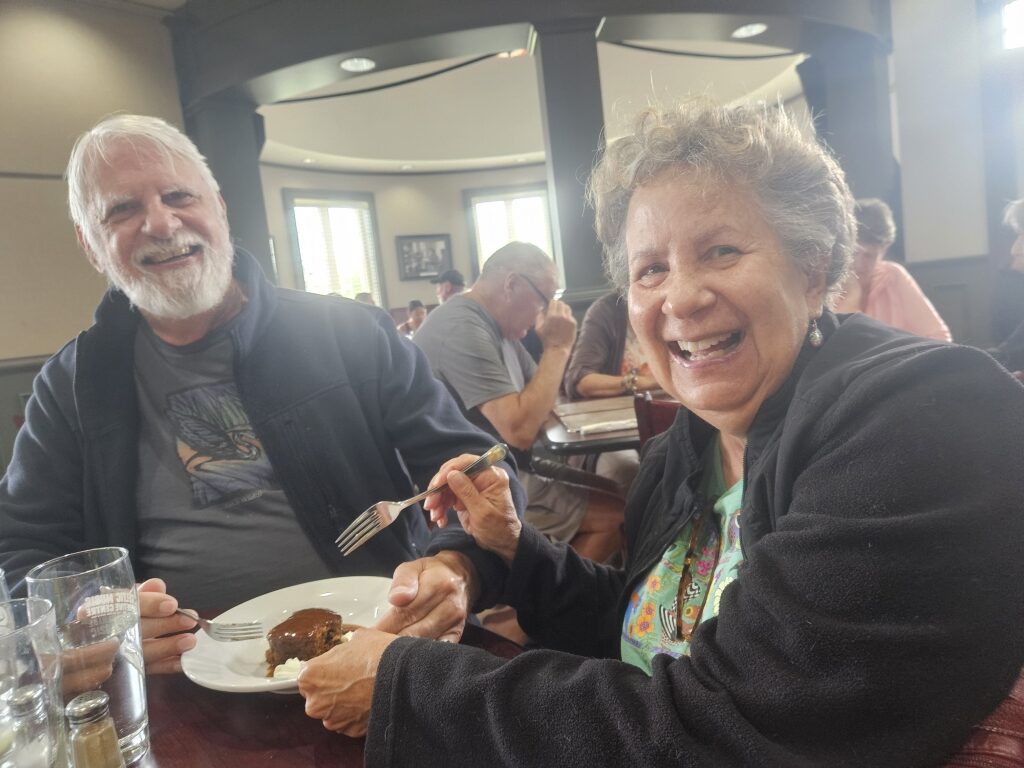
And the dessert was so good that we had to order a second piece!
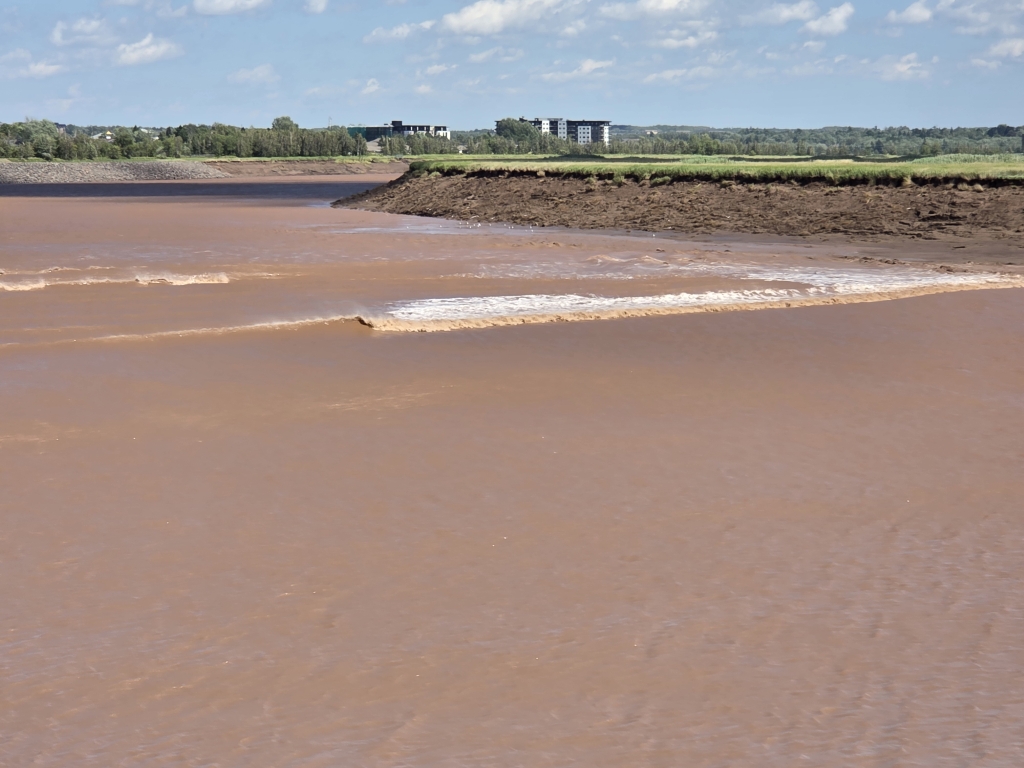
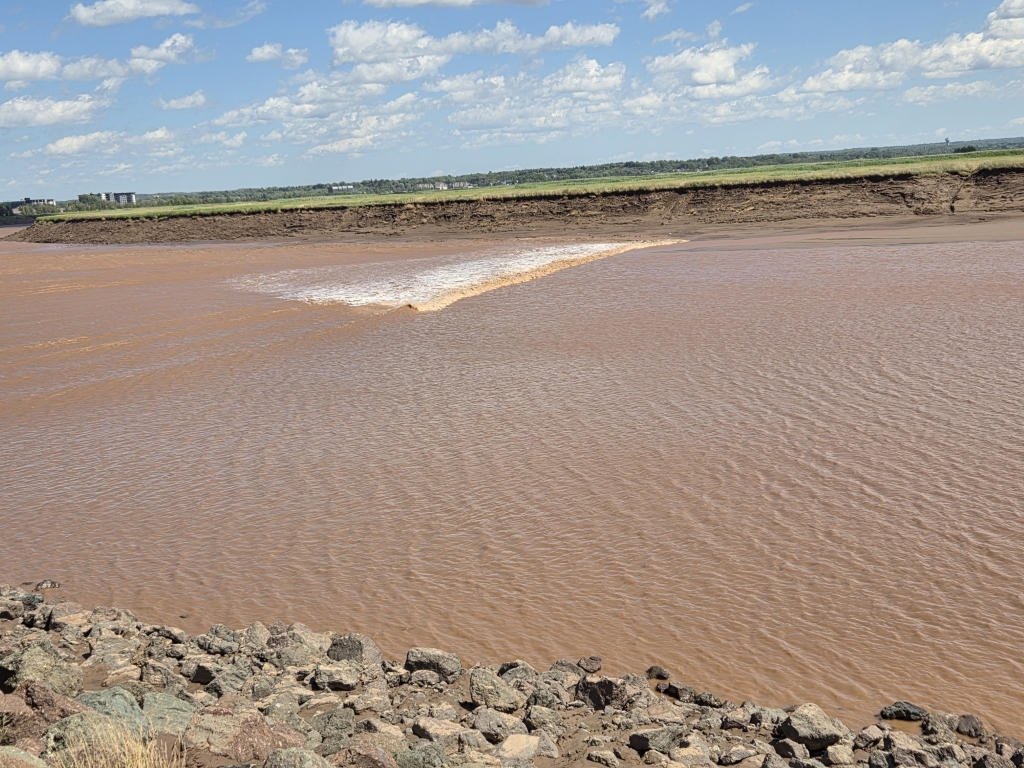
8/4 — The tides on the Bay of Fundy are the largest in the world, and often reach over 50 feet! As the tide comes in, it pushes water back up the rivers. In Moncton, New Brunswick, the flow of water UP the river, called a tidal bore, can sometimes be great enough to cause a standing wave that can be surfed! That was not the case this day, but still they were visible.
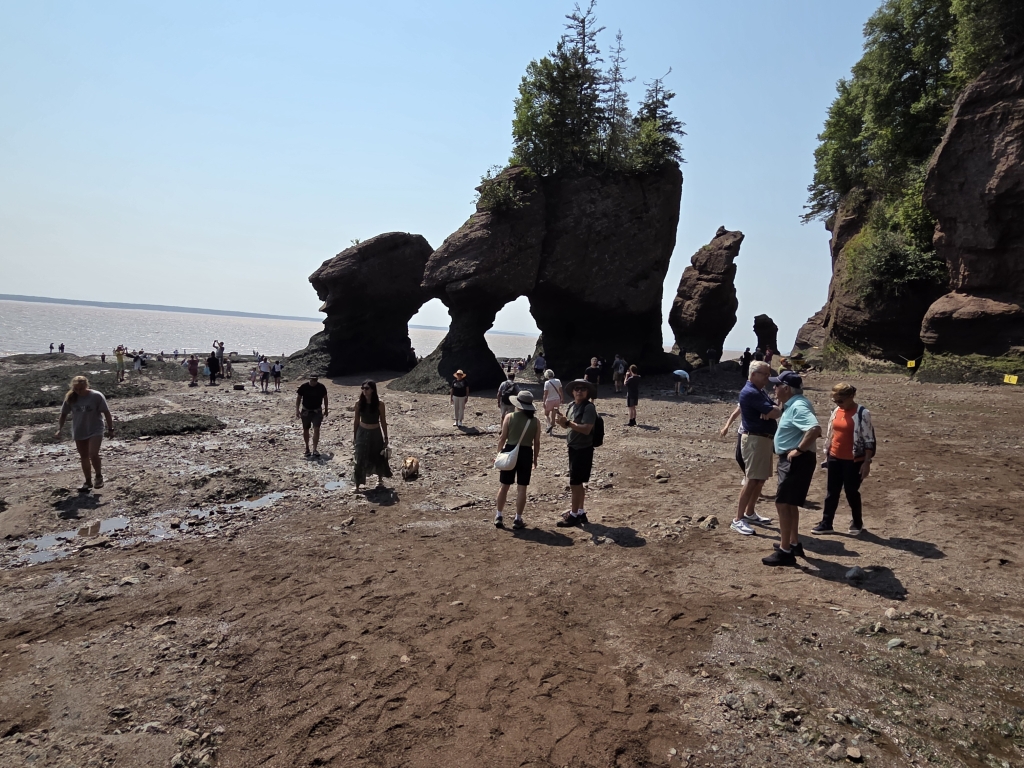
8/04 – 8/05 — Later that day and early the next we visited the Hopewell Rocks. They provide a graphic demonstration of the difference in the tides there.
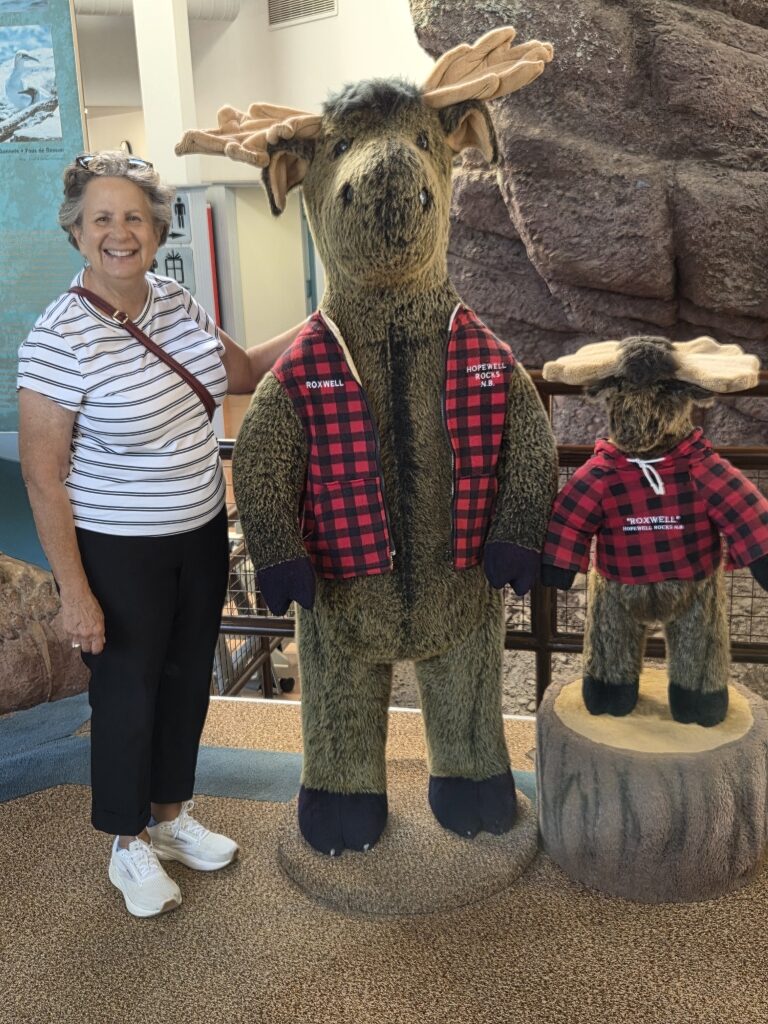
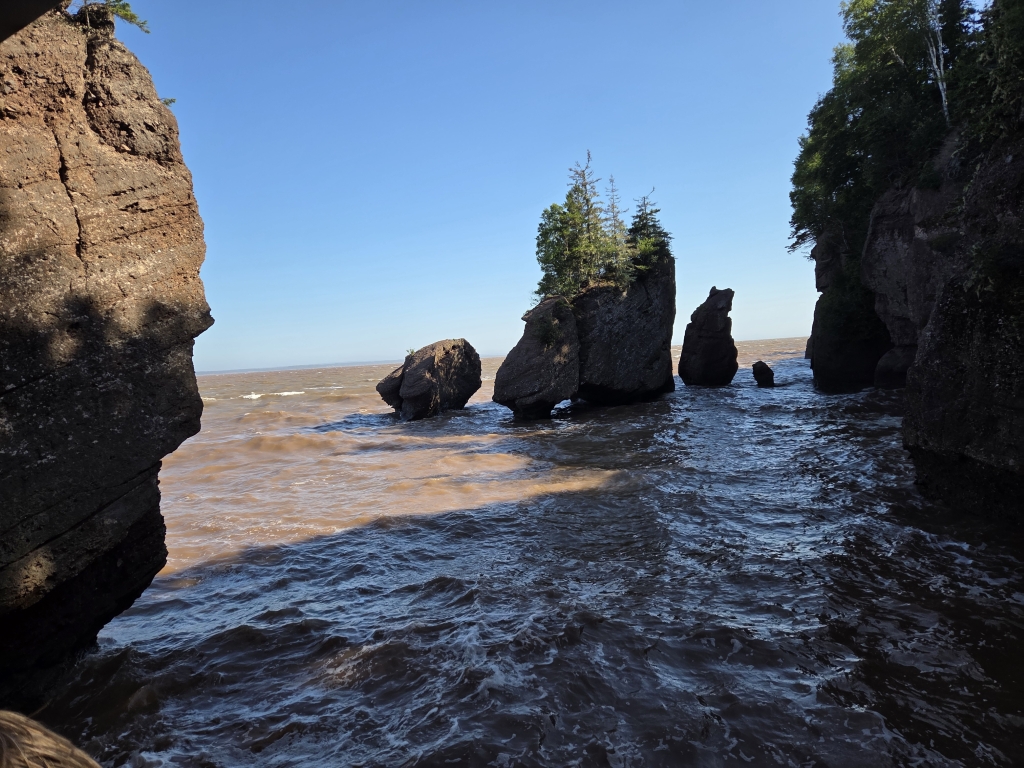
Here is a picture from about the same location taken at low tide. Judith is standing in the middle.
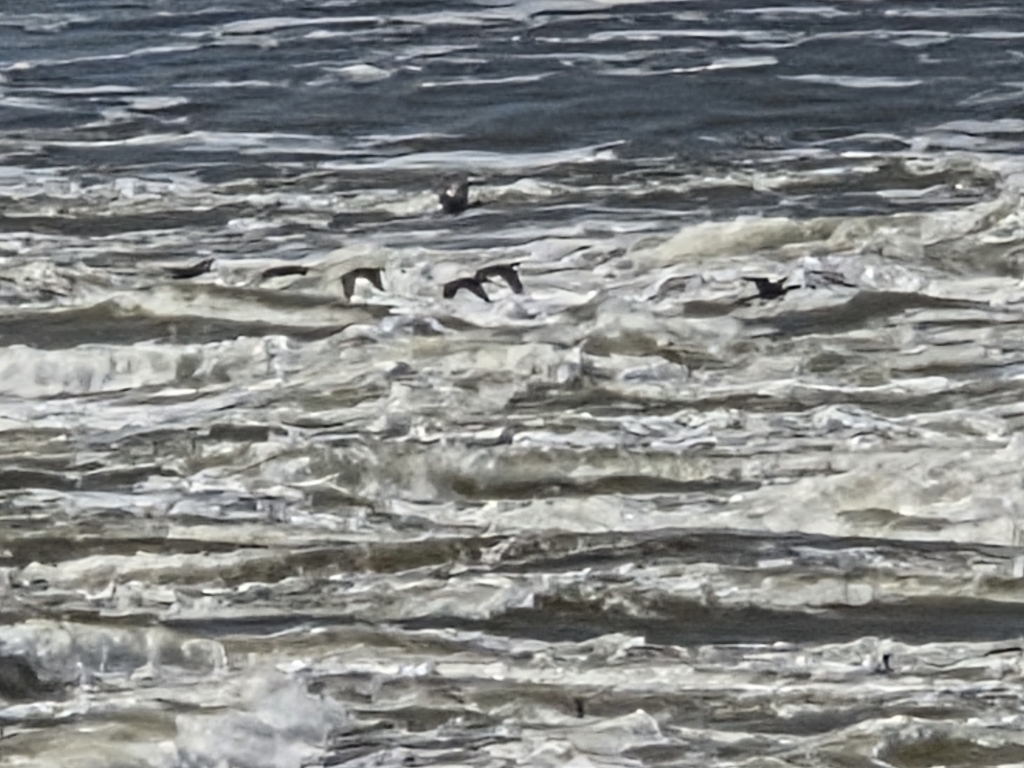
8/06 — The next day we visited the “reversing rapids” in St. John, New Brunswick. While we only visited once, so we didn’t see the reversing effect, it was still an interesting stop. The cormorants were feeding like crazy in the turbulent waters of the rapids.
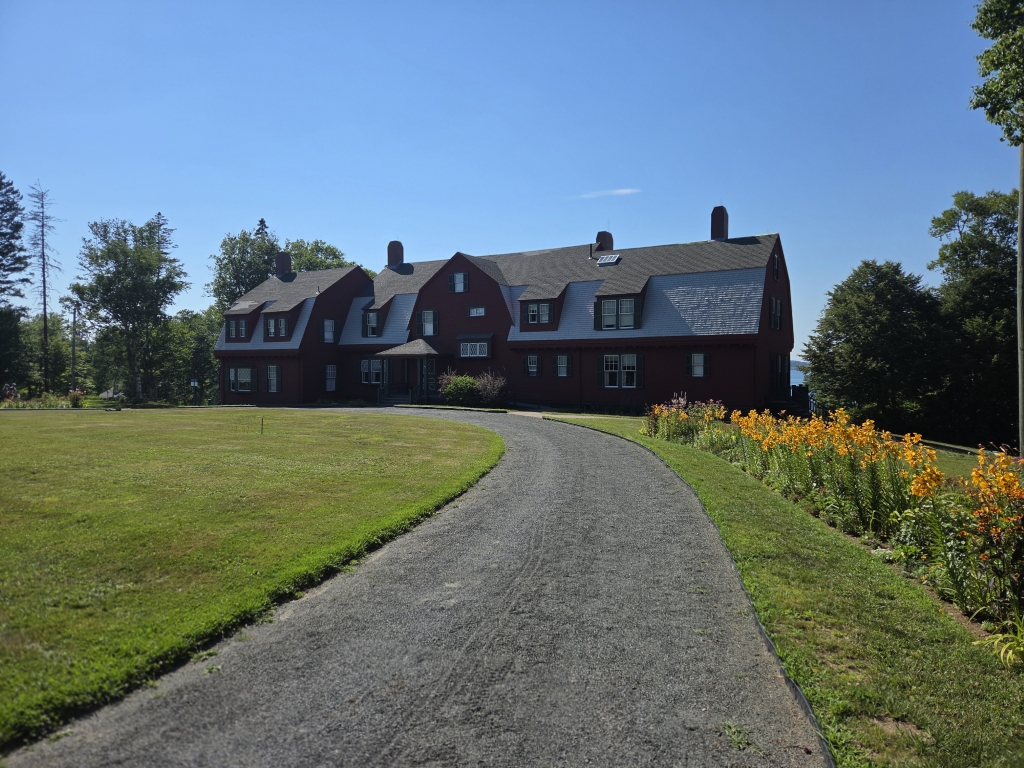
We then took two ferries to reach Campobello Island. This had been the summer retreat for Franklin Roosevelt’s family for many years, and FDR grew up and learned to sail here. On a trip to the island in 1921 he visited a Boy Scout Camp where later several boys became infected with polio. He was deathly ill while on the island and nearly died before eventually being moved to the mainland and on to New York.
Tomah Joseph, a Passamaquoddy tribal leader, taught young Franklin how to navigate the currents and waters around Campobello Island. This would prove to be a life-long friendship.
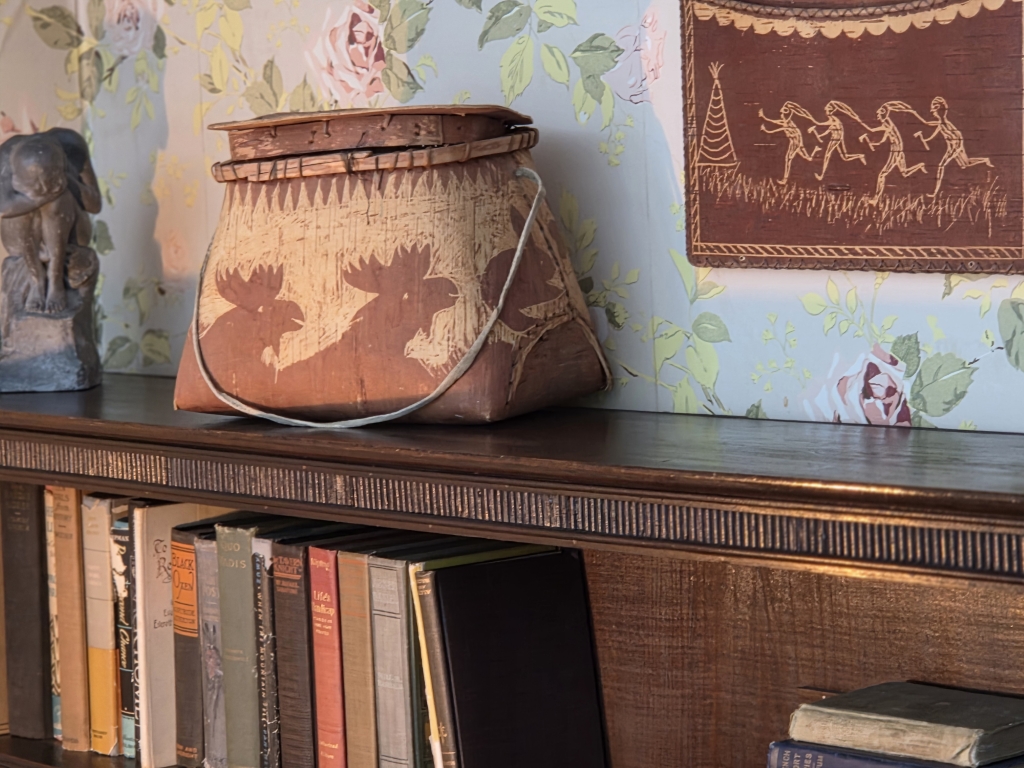
Other rooms in the cottage, including FDR’s bedroom.
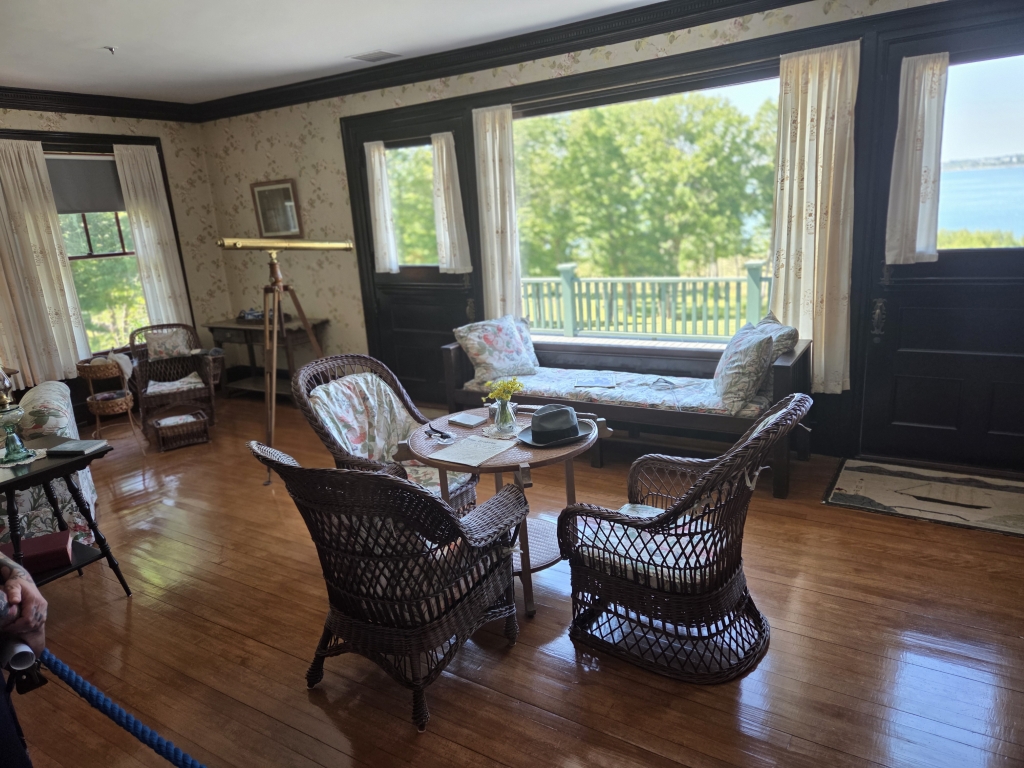
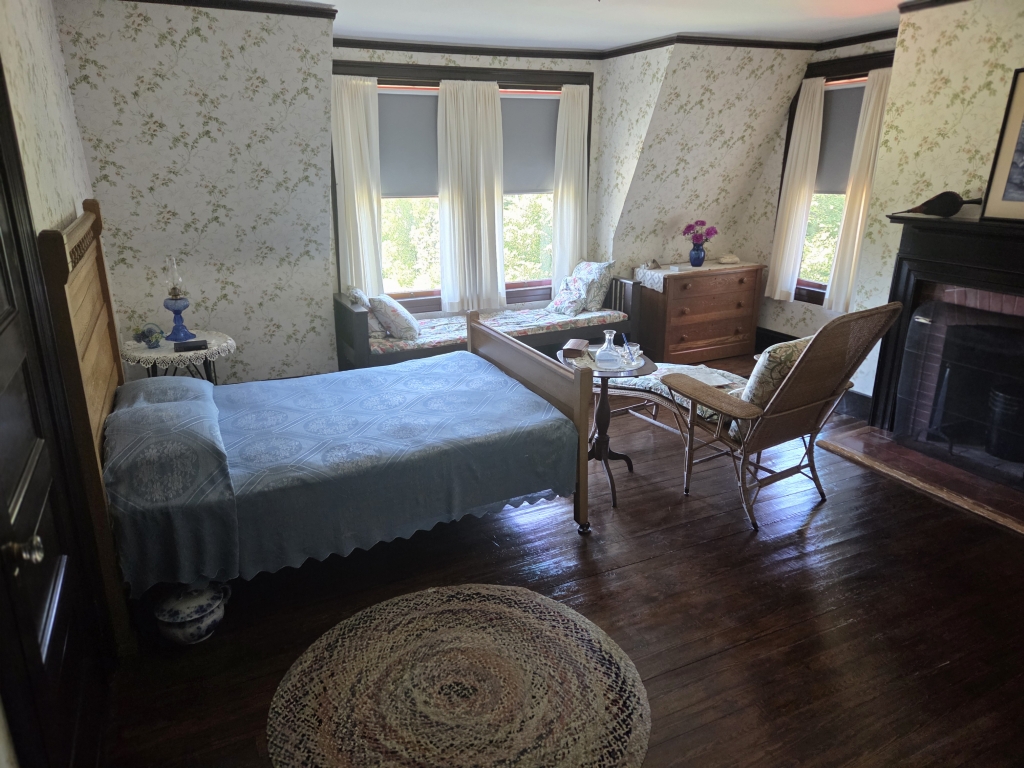
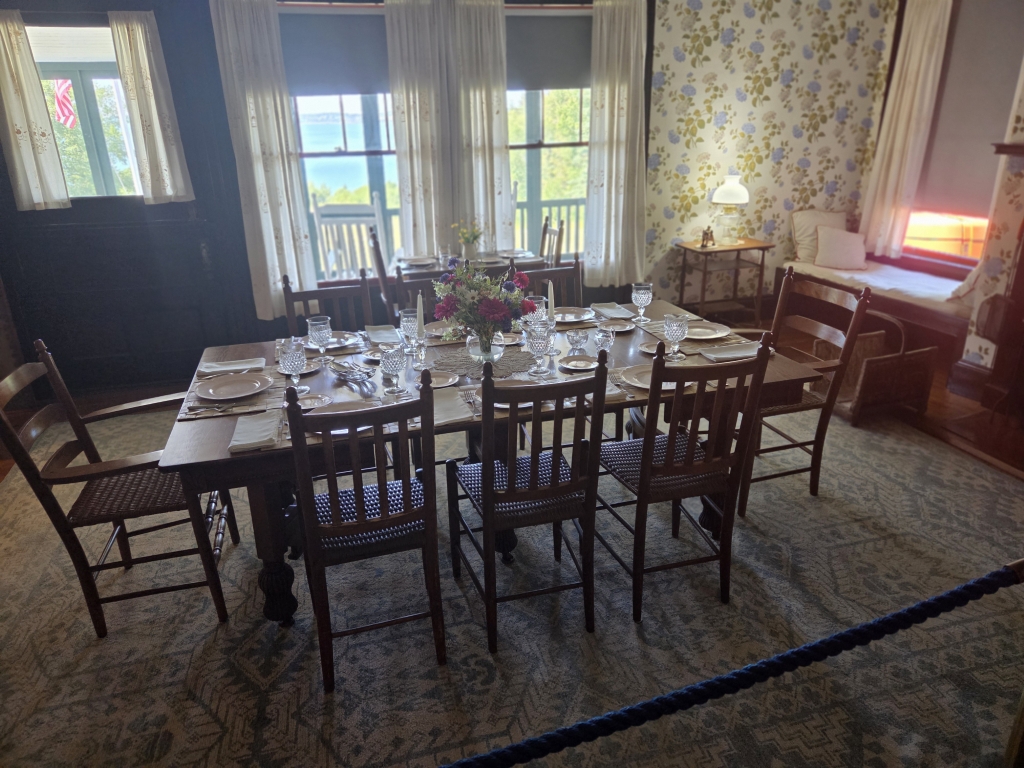
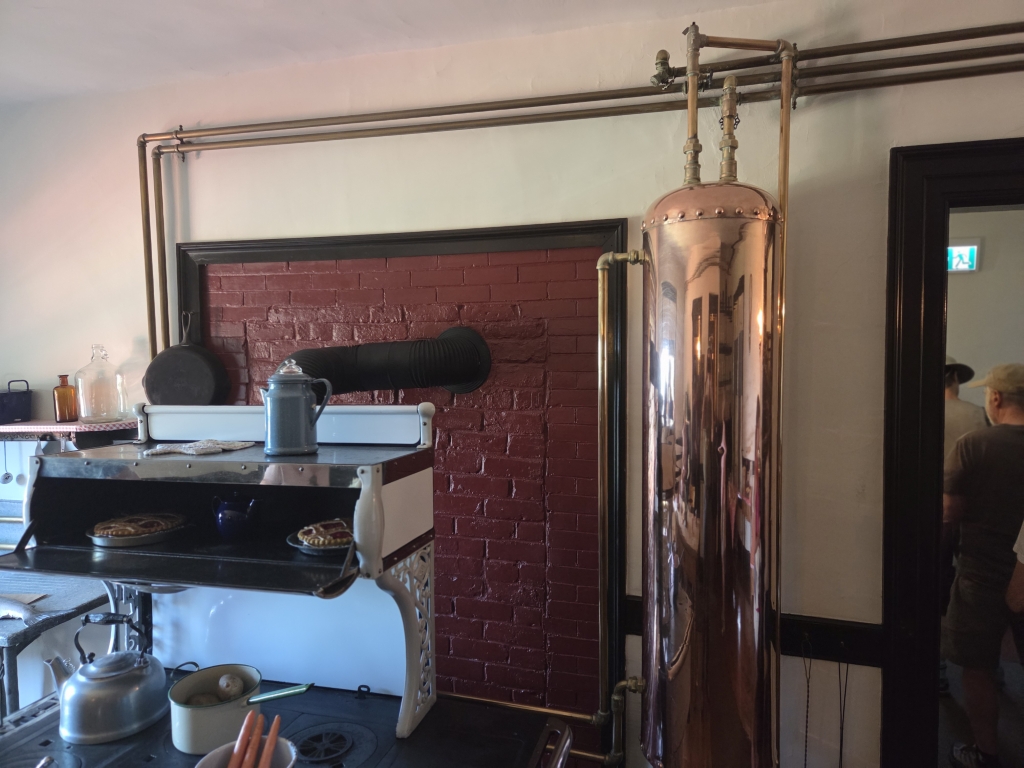
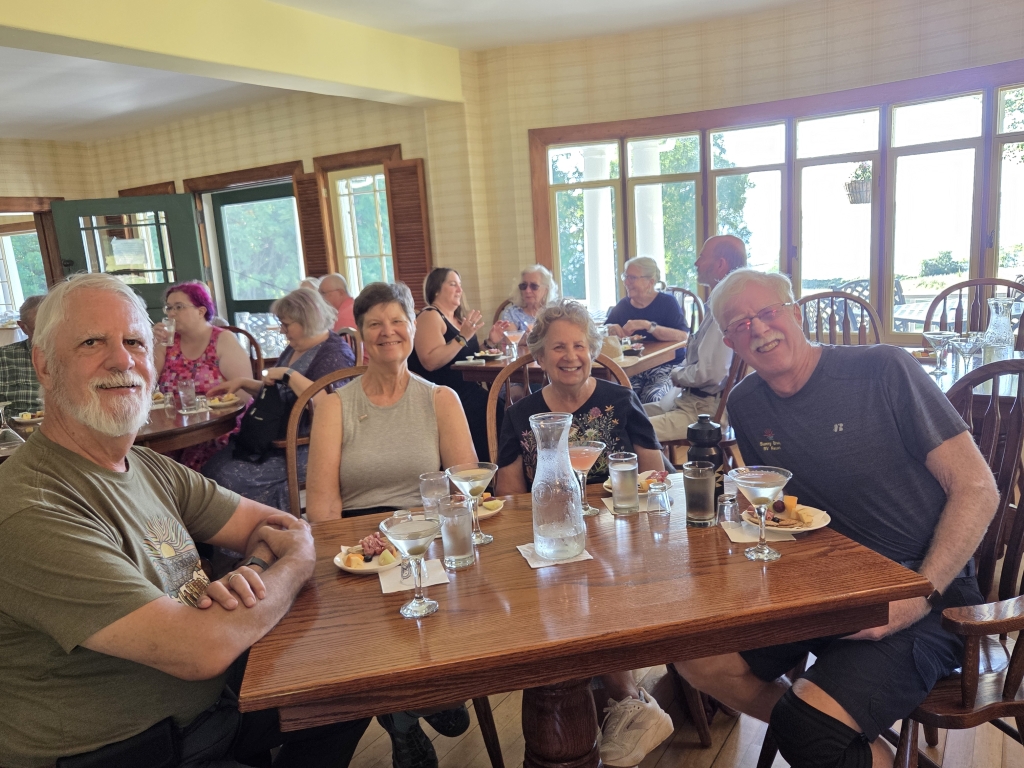
We attended two special events while on the island: “Tea with Eleanore” and “Cocktails with FDR”. Each included a wonderful talk by one of the Island’s docents.
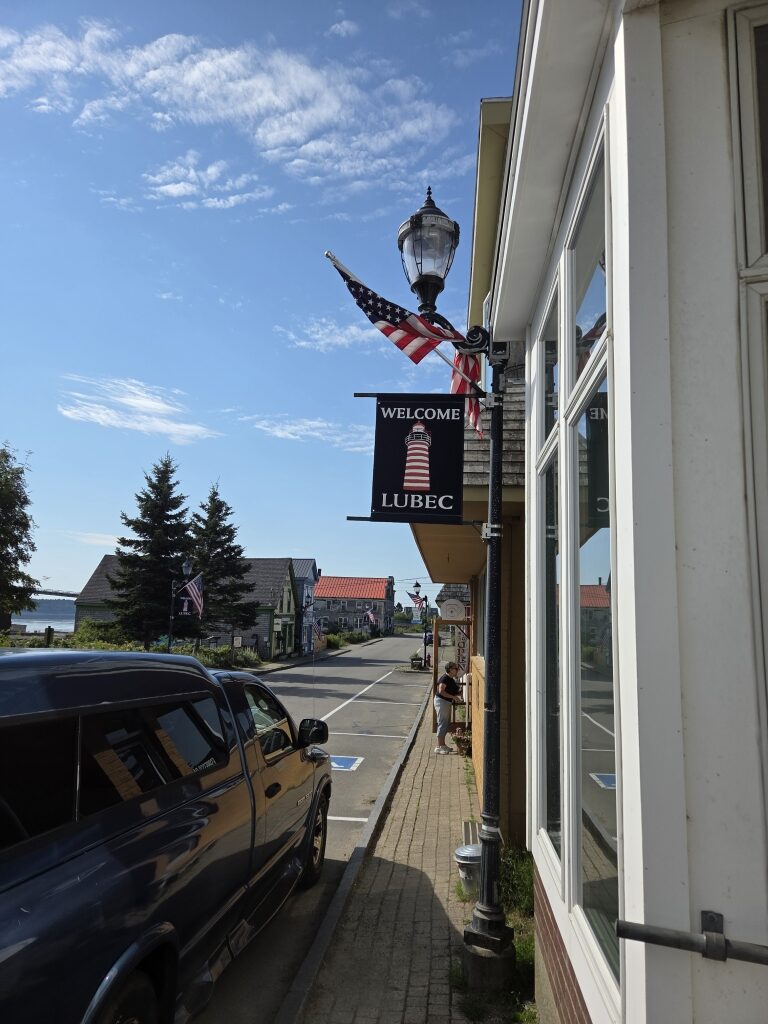
Then we returned to the good old U.S.A. across the short bridge to Lubec, ME.
Next Post: 2026 Acadia N.P. & Canadian Maritimes – Part 4 – The Berkshires
Previous Post: 2026 Acadia N.P. & Canadian Maritimes – Part 2